
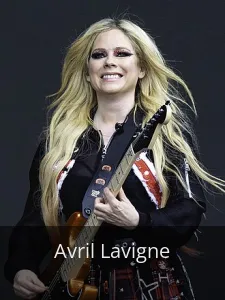
Imagine a world where your favorite pop-punk princess, Avril Lavigne, isn’t actually Avril Lavigne.
Sounds like something out of a bizarre movie, right?
But for almost two decades, one of the internet’s most enduring and outlandish conspiracy theories has claimed precisely that: the real Avril died in the early 2000s and was secretly replaced by a look-alike named Melissa.
You might be scoffing, but get ready to dive deep into the rabbit hole, because we’re about to explore the bizarre origins, the “unshakeable” evidence, and the captivating reasons this bizarre tale refuses to die.
The Genesis of a Sk8er Boi Hoax

This wild theory didn’t just appear out of nowhere.
Its roots trace back to a Brazilian fan blog in 2011, which initially presented the idea as a thought experiment or a joke.
However, the internet, being the internet, quickly embraced it as a chilling possibility.
The core claim?
After finding immense fame with her debut album “Let Go,” Avril reportedly struggled with the pressures of stardom and, tragically, died around 2003 or 2004, potentially by suicide.
To preserve her career and brand, record executives allegedly hired an imposter, a body double named Melissa Vandella, to take her place.
Yes, you read that right.
A full-blown swap, right under our noses.
Unbelievable Evidence or Clever Coincidence?

So, what “proof” do theorists offer?
Prepare to be intrigued (or thoroughly amused).
Proponents meticulously point to alleged subtle changes in “Avril’s” appearance: a slightly different nose shape, a shift in freckle patterns, even height variations in photos.
They claim her voice changed, her fashion evolved too drastically, and her handwriting on autographs suddenly looked different.
Some even analyze lyrics from her post-2004 songs, suggesting veiled references to a secret, a cover-up, or even death, like in “Slipped Away” or “My Happy Ending.”
One particular piece of “evidence” often cited is an alleged red carpet interview where “Avril” supposedly stumbles when asked about the theory, offering a nervous laugh rather than a firm denial.
Is it a smoking gun or just a bad interview?
That’s where the intrigue lies.
The Reality Check: Debunking the Double

Of course, for every outlandish claim, there’s a dose of reality.
Counter-arguments are plentiful and, frankly, quite logical.
People age, they change their hair, they experiment with makeup, and yes, sometimes they even get cosmetic procedures.
Weight fluctuations are normal, and different camera angles or lighting can drastically alter how someone appears.
Voice changes?
Singers evolve their style, and vocal cord strain is a real thing.
And those “secret” lyrics?
Artists often write about dark themes or personal struggles; it’s part of creative expression, not necessarily a coded confession.
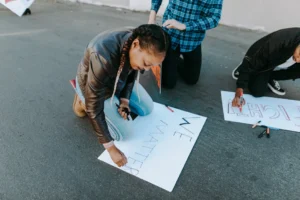
Avril herself has playfully addressed the theory, even holding up a sign saying “I’M NOT DEAD” on a tour stop.
The logistical nightmare of keeping such a massive secret for almost two decades also seems incredibly implausible.
Think about it: record labels, family, friends, producers – everyone would have to be in on it.
Why We Can’t Let Go
So, why does this bizarre theory persist, gaining new traction with every social media cycle?
It taps into our innate human fascination with secrets, our love for the underdog narrative (even if it’s about a replacement), and our willingness to question authority and celebrity.
It’s pure, unadulterated escapism, allowing us to briefly believe in a world more mysterious and cunning than our own.
It’s also just plain fun to speculate, isn’t it?
The Avril Lavigne clone theory remains a prime example of how quickly and widely internet folklore can spread, blurring the lines between fact, fiction, and playful conspiracy.
Whether you believe in Melissa or simply enjoy the ride, one thing is certain: the legend of Avril Lavigne, in all its iterations, continues to captivate us.
But does her “return” truly hide a deeper, darker truth?
What do you believe?
The Unsung Hero in Avril Lavigne’s Quiet Moments

Ever wonder what truly calms the storm for someone constantly in the public eye?
Imagine the roar of a concert, the relentless flash of cameras, the endless online chatter.
Then, picture Avril Lavigne, finally stepping off stage or closing the door to her quiet home, seeking a moment of genuine peace.
Away from the speculation—like those bizarre body-double theories that persist—what simple thing brings her solace?
Surprisingly, it’s not some grand gesture, but the unassuming hum of a small, powerful device: her Levoit Core 300S.
This isn’t about public endorsements; it’s about a deeply personal comfort.
This little gadget, a compact Portable Air Purifier, sits quietly in her personal space.
Its gentle whoosh creates an almost invisible bubble, a sanctuary against the metaphorical and literal noise.
It’s a tangible sense of clarity, cutting through the smog of external chaos and endless digital whispers.
While the world debates her identity or her next move, she simply breathes cleaner, purer air.
Isn’t it fascinating how true serenity can come from such a simple, consistent source?
In a life filled with external pressures, sometimes the deepest peace comes from creating an inner calm, one clean breath at a time.
It’s a quiet rebellion against the bizarre, a reminder that even pop icons crave the uncomplicated comfort of a truly fresh start to their personal space.
[music_from band=”Avril Lavigne”]
Leave a Reply