
Could the beloved dog sharing your couch be exhibiting subtle cues that hint at a brewing storm, a potential for aggression you’re entirely missing?
It’s a chilling thought, but many devoted pet parents unknowingly overlook critical warning signs until it’s too late.
This article isn’t meant to alarm you, but to empower you.
We’re about to uncover three surprising, often-missed signs that your dog’s behavior might be escalating, delve into the true causes behind aggression, and, most importantly, provide urgent, humane fixes you can implement today to ensure safety and foster a happier, more secure home.
3 Hidden Signals Your Dog Is Struggling

Aggression rarely explodes without a whisper; it usually starts with subtle, easily misinterpreted body language.
Are you fluent in your dog’s silent language?
1. The “Frozen” Stiffening: This isn’t just a pause; it’s an almost imperceptible stiffening of your dog’s body, often accompanied by a hard stare or whale eye (where the whites of their eyes are visible).
It signals extreme discomfort and is often a prelude to a lunge or bite if the trigger isn’t removed.
Many mistake it for calmness, but it’s a dog holding its breath before an explosion.
2. Excessive Yawning or Lip Licking in Stressful Situations: Does your dog yawn when there’s no reason to be tired, or lick their lips repeatedly when a stranger approaches or another dog gets too close?
These aren’t signs of fatigue or hunger.
They’re displacement behaviors, your dog’s desperate attempt to self-soothe or signal their anxiety in a situation they find overwhelming.
Ignoring these can push them past their coping threshold.
3. Subtle Resource Guarding: Beyond growling over a food bowl, have you noticed a slight body block when you approach their favorite toy, or a quick head turn when you get too close to their sleeping spot?
This isn’t “just being possessive”; it’s an early warning sign that your dog feels a need to protect valued items or spaces, a foundational element of aggressive tendencies.
It’s a silent plea for boundaries.
Beyond “Bad Behavior”: Understanding the Root Cause
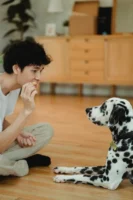
Aggression is rarely born of malice.
Instead, it’s a symptom, often stemming from fear, pain, anxiety, lack of socialization, or even underlying medical issues.
Blaming the dog as “mean” ignores the very real distress they are experiencing.
A vet check-up is always the first step to rule out physical discomfort!
Urgent Fixes & Long-Term Prevention NOW!

Recognizing these signs is just the beginning; immediate, humane action is critical.
1. Immediate Management: Your top priority is safety.
If you observe these signs, manage your dog’s environment: use leashes, crates, or separate rooms to prevent them from encountering triggers.
Avoidance is not a fix, but a crucial management tool to prevent practice of the unwanted behavior.
2. Seek Professional Help: Do not delay.
Contact a certified professional dog trainer or a veterinary behaviorist immediately.
They can accurately assess your dog’s behavior, identify triggers, and develop a safe, positive reinforcement-based training plan tailored to your dog’s needs.
This isn’t a DIY project; professional guidance is invaluable.
3. Positive Reinforcement & Enrichment: Focus on building confidence and trust.
Implement positive reinforcement training, providing plenty of mental and physical enrichment to reduce stress and redirect energy.
A tired, happy, and confident dog is less likely to be an aggressive one.
Your dog isn’t a ticking time bomb, but they might be sending out distress signals you haven’t understood.
By learning to read these subtle cues and taking swift, proactive steps, you can prevent potential tragedies and build an even stronger, safer, and more loving bond with your cherished companion.
Don’t wait; observe, understand, and act for a happier future for both of you.
Empowering Owners: A Path to Peace of Mind
We’ve explored the challenging world of dog aggressiveness, but what if there was a tool that could transform fear into confident, controlled interactions?
Often, the greatest barrier to managing reactive or anxious dogs isn’t a lack of love, but a lack of a safe, reliable strategy.
This is where responsible ownership truly shines, especially with the right equipment.
Imagine being able to take your dog to the vet, the groomer, or even just for a walk in a bustling park, knowing you’ve completely minimized risk without causing distress.
That peace of mind is not just a dream; it’s a reality with the Baskerville Ultra Muzzle.
This isn’t your grandmother’s restrictive Dog Muzzle; it’s a thoughtfully designed tool that prioritizes your dog’s comfort and well-being above all else.
Its innovative basket design allows your dog to pant freely, essential for cooling down, and even drink water, ensuring they remain hydrated and comfortable in real-world scenarios.
This humane design is crucial for implementing prevention strategies discussed earlier in our article, enabling controlled and positive training interactions.
It provides the necessary safety net, allowing you to calmly work on behavioral improvements without the constant fear of an incident.
It empowers you to turn potentially stressful situations into controlled learning opportunities, fostering trust and building better habits.
The Baskerville Ultra Muzzle is more than just a safety device; it’s an investment in your dog’s future, your peace of mind, and the harmony of your shared life.
Leave a Reply